Eight Things I Learnt from Editing the Diaries of a Victorian Provincial Journalist
http://doi.org/10.11647/OBP.0173.0302

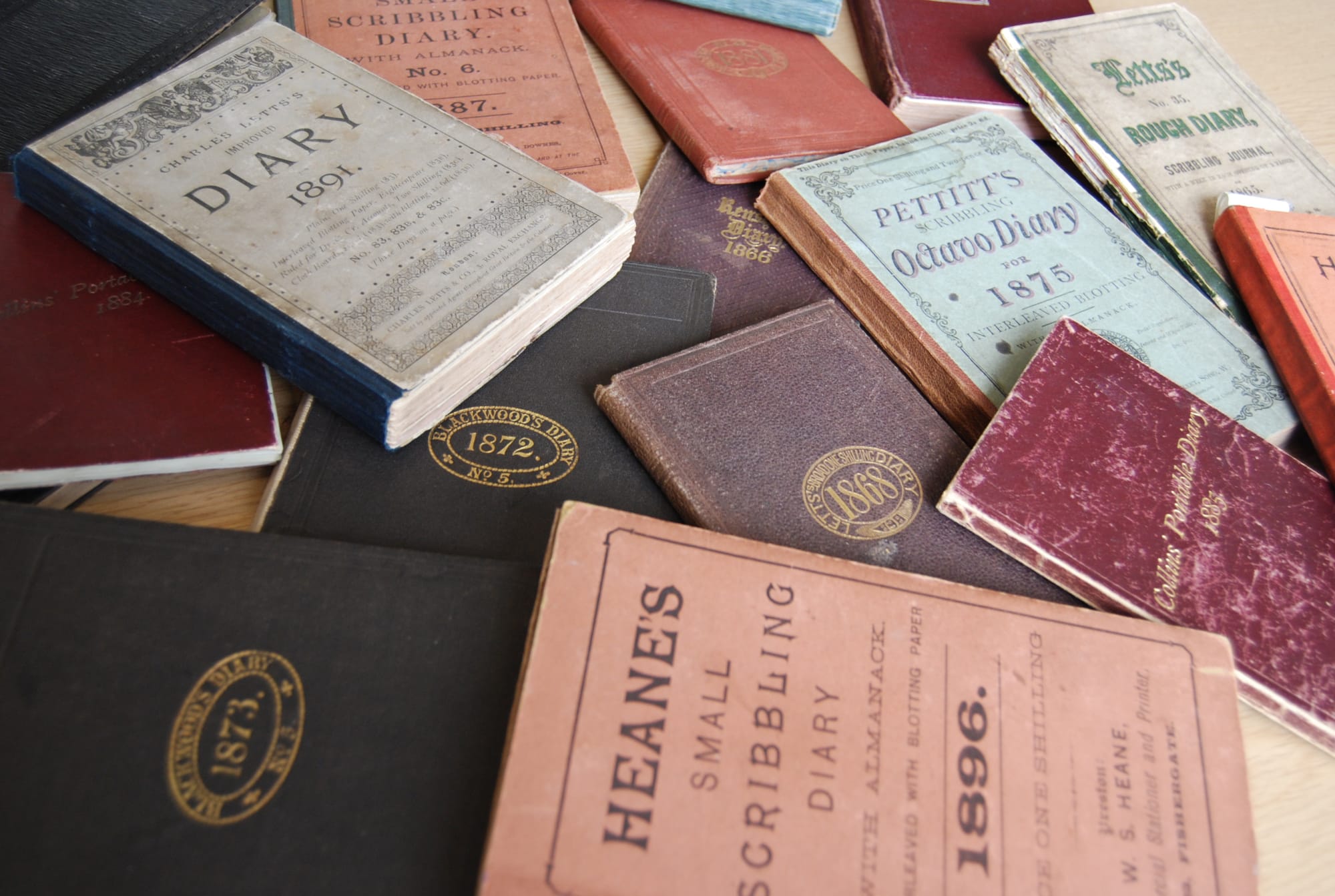
These diaries, covering 17 years between 1865 and 1912, were written by Anthony Hewitson (1836-1912), who spent most of his life working on weekly newspapers in northern England. What did I learn during these 20 years of working with and on the Hewitson diaries?

By Andrew Hobbs
These diaries, covering 17 years between 1865 and 1912, were written by Anthony Hewitson (1836-1912), who spent most of his life working on weekly newspapers in northern England.
They are hugely significant, casting a unique light on the anonymous world of Victorian journalism, most of which was published outside London, in small towns and regional cities across Britain and Ireland. Hewitson was not a big name, but he was representative of thousands of other reporters who produced the millions of reports feeding into the nineteenth-century media ecosystem.
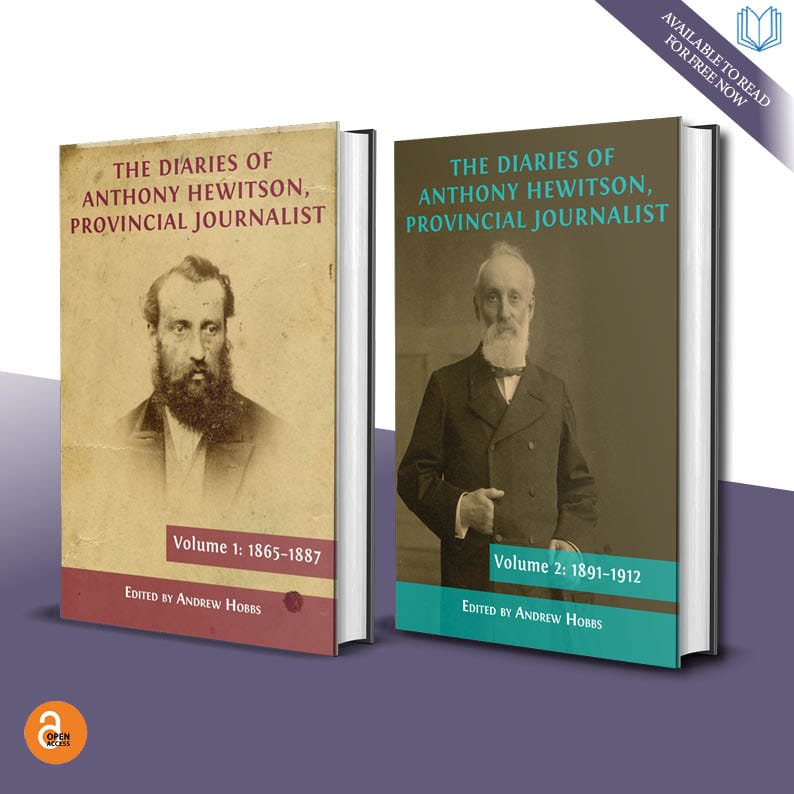
I joined two Hewitson descendants, Margaret Dickinson and Pauline Wainwright, in transcribing the diaries, now owned by Lancashire Archives. From this transcription, checked by volunteers from the Friends of Lancashire Archives, I produced a two-volume scholarly edition (Vol. 1; Vol. 2).
Who was Anthony Hewitson?
The son of a stonemason, he grew up in Ingleton, North Yorkshire before a printing apprenticeship on the Lancaster Gazette, where he taught himself shorthand and began to freelance for the Manchester Guardian. He settled in Preston, and ran a weekly newspaper, the Preston Chronicle, from 1868 to 1890.
I first heard of the diaries in 2006, and immediately realised their value and rarity. I am aware of only two other diaries of nineteenth-century provincial journalists, neither of them as detailed or revealing as Hewitson’s.
Volume 2 was published this year – so what did I learn during these twenty years of working with and on the Hewitson diaries?
1. The pleasures of collaboration
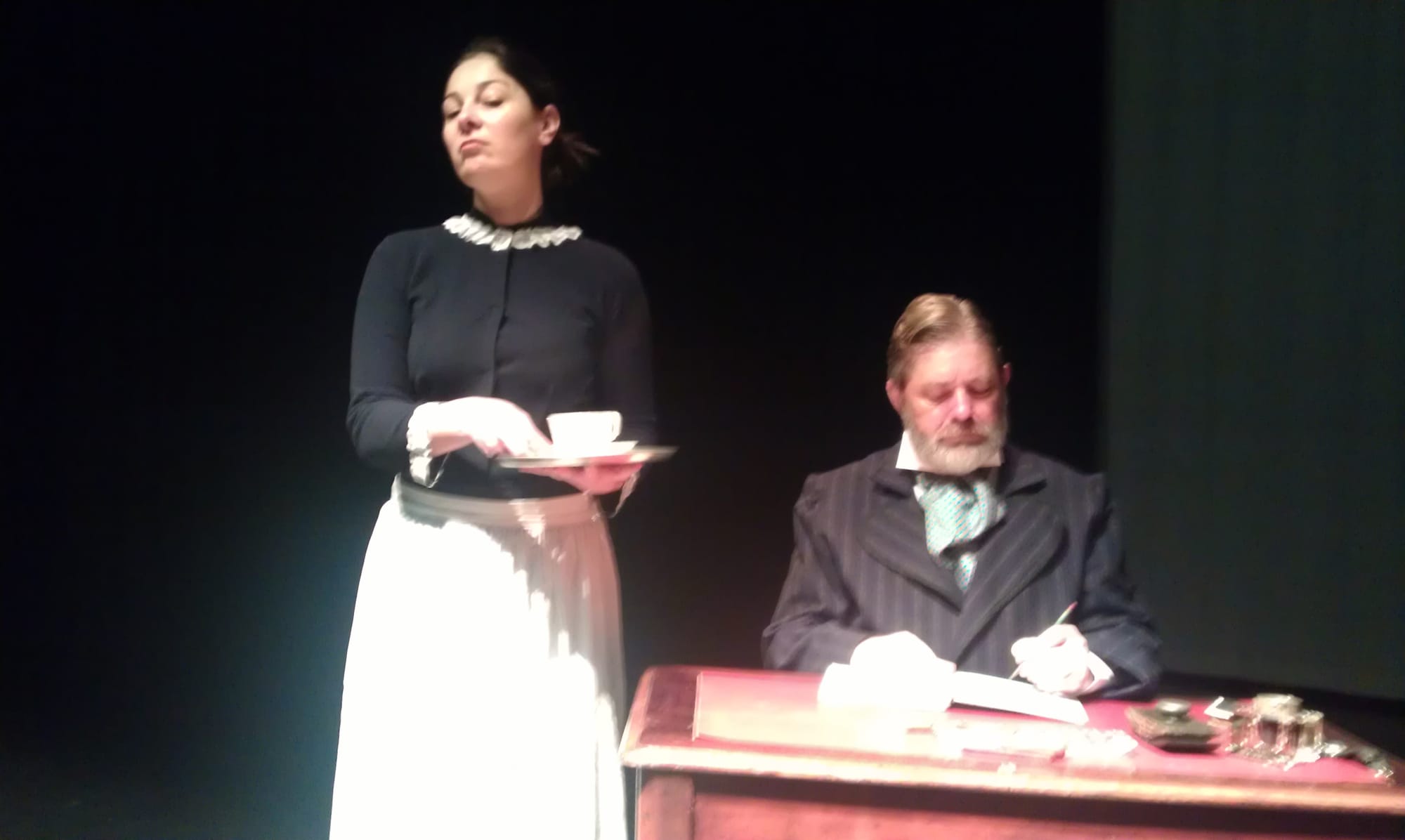
Managers, staff and volunteers at the Lancashire Archives were tremendously helpful, and the diaries led me to become a friend of Hewitson descendant Margaret Hewitson. I gave talks about Hewitson, and audiences added to my knowledge and corrected errors. The most enjoyable collaboration was working with playwright Derek Martin and actor John Hickey on a play, marking the centenary of Hewitson’s death in 2012.
2. The emotional power of the diaries
Some of the most moving entries are about Hewitson’s children. His wife Margaret gave birth to 11 children, but only seven survived. In this excerpt, Hewitson writes about his two-year-old daughter Ada, who is seriously ill:
Thursday 20th November 1873: I am now (1.47 Thursday morning) writing in her dear little presence; she is uneasy and yet sleeps bits. Very weak and all her fullness and plumpness gone. What will the end be? Will she recover. The suspense has been fearful. I hope she will live. Oh how I would work on if I only knew she would. At 4.20 this morning, after feeding and attending to Ada I laid me down upon the sofa, leaving my wife in charge … at twenty nine and three quarters of a minute past seven same morning she quietly died away. Bless her. She was a most sharp, spirited and beautiful child.
Working on the diaries, I became emotionally involved with Hewitson’s life, his family, his work, his business, his friendships. It made me think about my own life.
3. The diaries as historical sources
I learnt so much about journalism, but the diaries, when supplemented with wider reading, also tell us about:
- family relationships, gender, attitudes to marriage, children, death;
- emotions;
- mental health;
- reading (Hewitson read widely and noted many of the books he consumed);
- provincial culture: literature, science, politics, theatre, music hall;
- ageing and retirement;
- political history at municipal and constituency level.
4. The pleasures of footnotes
Many of the diary entries require some explanation or background information. It has been fun to go down rabbit holes, discovering for example that William Morris walked along the canal towpath behind my house in Preston when he visited his friend, a Unitarian minister. I learnt that one technique for ensuring an election went your party’s way was to ‘bottle up’ opposition voters by luring them into a pub, plying them with free beer, and keeping them prisoner for the duration of the poll (three or four days). Or that Hewitson’s friend, the operatic tenor William Parkinson, is mentioned in James Joyce’s short story The Dead.
5. Detailed insights into Victorian reporting
Reading the diaries day by day, I began to feel Hewitson’s weekly rhythms and working routines:
- sharing his reporting notes with a colleague on a rival paper;
- hunting for “paragraphs” of gossip;
- taking shorthand notes of meetings, court cases and speeches;
- “dressing up” incoherent and ungrammatical speeches;
- offering what is now called “copy approval” before submitting a report of a priest’s lecture;
- working long hours and covering long distances on foot, horsedrawn cart or by train;
- mixing work and leisure, taking friends and family on reporting assignments (even inviting his wife to view a corpse found in a field), enjoying free dinners, and often ending the day in a pub, gossiping or discussing Thomas Carlyle.
6. The local press as publishing platform
Hewitson reviewed new publications, such as Longfellow’s latest poetry volume (he wasn’t impressed), or the month’s magazines. If we multiply the hundreds of weekly newspapers carrying such reviews by their frequency of publication, it may be that nineteenth-century literary reviewing was done mainly by local newspapers, rather than London publications. Perhaps Gissing’s New Grub Street has misled us.
Hewitson was a keen local historian. The diaries show him conducting field research (looking for a Roman road), oral history (gathering local legends about the site of a Civil War skirmish), and transcribing archival documents, including some documents now lost.
7. The diaries make ordinary places special
This, to me, is the attraction of local media: its message that the everyday is worth recording. Now, after twenty years with the diaries, almost every street in Preston, every village in the surrounding countryside, is haunted – pleasantly – by reminders of people and events from the diaries.
8. I don’t like Anthony Hewitson
I discovered from trade union records that he was the worst printing employer in town, he was racist and misogynist, arrogant and spiteful.
But he has taught me so much about Victorian journalism and Victorian society, the experience has been enjoyable and fascinating, I’ve made good friends along the way, and it’s been a privilege to edit his diaries.
Thank you Anthony, even thought I don’t like you any more.
The two volumes of Hewitson's diaries can be read freely in PDF or HTML, or bought in EPUB, paperback or hardback:
- The Diaries of Anthony Hewitson, Provincial Journalist, Volume 1: 1865–1887 edited by Andrew Hobbs, https://doi.org/10.11647/OBP.0262
- The Diaries of Anthony Hewitson, Provincial Journalist, Volume 2: 1891–1912 edited by Andrew Hobbs, https://doi.org/10.11647/OBP.0270