Review: The Uprising (2026) Paul Greengrass (dir.)
http://doi.org/10.11647/OBP.0173.0303

We’ve been waiting for a long time for a Hollywood treatment of The Peasants’ Revolt – 645 years to be precise. But more seriously, it is strange that the story has had to wait this long to appear on the big screen. But now we have a film to discuss, what should we make of it?


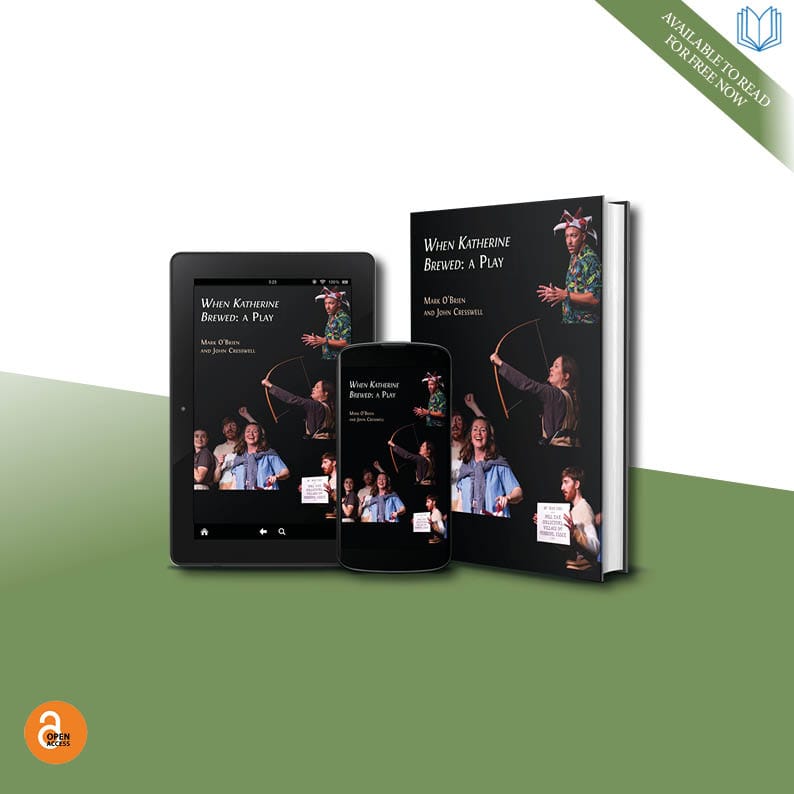
By Mark O’Brien (author of When Adam Delved and Eve Span: A History of the Peasants’ Revolt of 1381 and contributor to When Katherine Brewed, a Play Telling the Story of the Peasants’ Revolt and Today’s New Radical Theatre)
We’ve been waiting for a long time for a Hollywood treatment of The Peasants’ Revolt – 645 years to be precise. But more seriously, it is strange that the story has had to wait this long to appear on the big screen. But now we have a film to discuss, what should we make of it?
The Uprising by Paul Greengrass is really two films in one; a long and a short. Within the limitations of what we might expect of a major US studio release, the first 108 minutes are a better than acceptable and often enjoyable dramatisation of the events. The final 20 minutes however are a bizarre and frankly unforgivable lurch into fantasy. Whilst the mark of Hollywood is noticeable from the beginning, the end sequence takes it all to a different level.
But first, ‘What’s good about it?’
The important moments of the Revolt are all there, as they are described in many of the historical chronicles. The depiction of its outbreak at Brentwood, Essex, is excellent, showing the arrogance of the tax collectors, their rough treatment of the villagers, and the coarse puberty test they carried out as proof of age. When Ploughman – the central figure played by Andrew Garfield who says, ‘I am just a farmer’ – explodes and screams ‘Enough” We have given you enough!’ you really believe him.
Very quickly, and with a pace that captures the breathless speed of the events, we are in the forest with the rebels hiding from the authorities but debating their next moves. This part of the film is great. The sense of a rapidly growing movement, the news of other risings, the conspiratorial letters, the meetings with rebels from neighbouring villages, the first encounters with the main leaders, Wat Tyler, the ex-soldier (Cosmo Jarvis), and John Ball, the radical priest (Jamie Bell) and the hill-top fires announcing the Revolt across the counties are all compelling.
Best of all are the aerial shots of the great gatherings and marches to Canterbury and then to London. The images of ordinary people, the land workers of England, converging and descending on the centres of power, realising their strength and determined to finish off the king’s councillors and speak directly to the young King Richard II (Woody Norman), for me were the best visuals in the film.
Also good was the scene at Rotherhithe (not Mile End as is said) when the Richard and his councillors went by royal barge to meet with the rebels. It conveys the excitement of the masses on the riverbank calling to their king to land, contrasted with the dawning realisation by the royal group of the seriousness of their situation.
And with the occupation of London by the two great rebel armies from Essex and from Kent, we enjoy the moment of the true power of the rebels on 13 June (the Feast of Corpus Christi) and 14 June 1381.
So, ‘What was not so great?’
It was with the events in London that for me the atmosphere of the film began to change, as did the rising itself. In London the rivalries of the guilds – the mediaeval organisations of merchants, artisans and journeymen – were murderous, split between the food guilds, the trading guilds and the manufacturing guilds, and with resentments particularly around which had access to the royal court for their business. The rebels from the villages of southeast England had no knowledge of all of this, their issues being heavy taxation for the king’s wars in France, bondage to the manor and excessive rent for land. But as they entered London the rising merged with the poisonous agendas of the London population, leading to the horrific killings of the Flemish weavers.
In the film, the occupation is portrayed chiefly as an orgy of bloodletting, two days and nights of chaotic mob rule with a desperate Wat Tyler stumbling through the streets shouting ‘No looting!’ But this mis-represents things. There was indeed violence, but not in the main random. The prisons of the Marshalsea, Fleet and Newgate were attacked, opened and the prisoners released, for instance. The Savoy, the sumptuous palace of the king’s uncle John of Gaunt and a symbol of the egregious wealth of the rich, was systematically destroyed. At the Temple, the lawyers’ quarter, tax officials were executed and the scrolls and parchments that enshrined the property laws of mediaeval England were burnt. And the Tower of London was stormed.
Some of this rational purpose is suggested in occasional shouts amidst the noise and commotion. We do see Sir Robert Hales (popularly named ‘Hob the Robber’), the deviser of the poll tax (Tom Hollander), and Archbishop Simon Sudbury (Stephan Dillane) get the chop. But it is still too easy to come away with the impression that this was no more than a violent frenzy, what happens when the passion of the masses is allowed free rein in revolution; an old establishment trope. Really, we should have been shown more of the planning before the Revolt, and of the Maidstone conference where the rebel leaders drew up their far-reaching demands amounting to the end of feudalism and the redistribution of the wealth of the church.
But it is with the flight of Ploughman from the massacre at Smithfield (the massacres came later in fact) that the film begins to drift from the license a generous audience might allow the director, to making us wonder what is really going on. Ploughman having just pulled his girlfriend from the mêlée (of course), then sprints to the gates of St Bartholomew’s Hospital to try to rescue Wat Tyler. There he encounters the militiamen of the Mayor of London (and brothelkeeper) William Walworth (Jonny Lee Miller). Now, with nimble moves and agile techniques he dispatches them with fist and scythe. So here, a fifty-something, emaciated and presumably exhausted farm labourer defeats a group of armed mediaeval soldiers. In these scenes it didn’t help me at all to recall Garfield’s Spider Man.
And there was the strange connection between the king’s mother Joan of Kent (Katherine Waterson) and Ploughman. This was pure fiction, intended to plant the idea that somewhere in the royal group there was compassion for the rebels (which there wasn’t!).
And ‘What was terrible?’
Many of the difficulties I’ve mentioned I might have put aside as just the limitations of mainstream cinema in its handling of a truly gigantic historical event. Don’t we often have to see past the director’s eye to retrieve what is worthwhile in bourgeoise culture as best we can?
However, in the last part of the film, ‘A Year Later’, Greengrass comes very close to destroying his creation. Ploughman, after having returned to his fields and rubbing mud into his face in a kind of transformative self-baptism, now becomes a rebel hero, lurking in the woods, wearing a hood and dressed in green, to seek the people’s revenge. In an entirely made-up scene, he and his gang one day confront the king and his retinue on a forest path. He slugs it out to the end with his nemesis William Walworth, almost kills the king, but chooses not to, and has one more bit of eye contact with Richard’s mum.
Now it seems Robin Hood has travelled forwards in time 200 years to be with us as the action hero Ploughman has become. Because it all has to come down to an individual, doesn’t it? Not the ingenuity, self-organisation and political intelligence of ordinary working people. To be fair, we should have seen this coming. In the US the early publicity gave the film the wrong title, The Uprising. The Rise of Robin Hood, causing an entertaining public spat between the distributers on either side of the Atlantic.
In the final scene, we get a long shot of the king’s palace, and hear his anguished groans, gripped as he is now, we are supposed to imagine, by fear and self-loathing.
Well, no. Richard II reigned for another 18 years and claimed divine authority because he had defeated the Revolt with God’s intervention. He became the foul monarch of Shakespeare’s Richard II.
The glaring question is why on earth did Greengrass end his film like this?
He has said he couldn’t finish on a down-note. He wanted the conclusion to be one of hope. But this wasn’t the way to do it.
He has also said in interviews that the contemporary resonance of the story for him is Brexit (really?!), which does explain a couple of incidental one-liners which jarred with me.
The Revolt was suppressed over the days following the murder of Wat Tyler, with more than 2,000 executions across the country. But in a larger historical frame we can see what it achieved. At the national and local levels, a shift in social and political relations occurred, meaning rulers were wary of provoking the common people. There were no more poll-taxes (until the era of Margaret Thatcher!), and serfdom was abolished in England long before any other part of Europe. And the rebels rose up in the most difficult of circumstances. Greengrass had a lot to work with here but chose not to. Instead of ending with the brooding and serious atmosphere of much of the film, and broad historical fidelity, we descend instead into romantic myth.
The story of the Peasants’ Revolt, properly told, and without Hollywood’s embellishments is already one of hope and inspiration. But its telling has always involved interpretation. For three centuries it was used as a cautionary tale, a warning that such an uprising must never happen again. But this changed with the English Civil War, the Jacobite rebellions and the French Revolution. Now the story was embraced as one of revolutionary courage. And in the late 19th Century and early 20th Century it was taken up by the left as belonging to the socialist tradition, the first of the great revolts that spread across Europe as far as Bohemia. And its resonance today lies in the costs of war levied on working people, ecological collapse, gross inequality and social injustice and insult.
What saves the film?
Much of this film is worthwhile, and in parts it is inspiring. It is noteworthy that the plot involves a significant female rebel in the character of Alyce (Thomasin McKenzie), an ex-nun with her own backstory of horrific treatment behind the cloistered walls of the nunnery she has fled. Women are few and far between in the historical chronicles.
But the film’s strongest recommendation is that it conveys clearly, powerfully and convincingly the main political theme of the Peasants’ Revolt, which is betrayal. The rebels of course believed that if they spoke to the boy-king, he would understand their plight and remedy their ills. And Richard II manipulated this political naivety, appearing to concede to their demands, only to then unleash savage revenge.
So finally, what are the lessons? Never trust what they promise! Never put down your shield! Never put down your sword!
When Katherine Brewed, a Play Telling the Story of the Peasants’ Revolt and Today’s New Radical Theatre by John Cresswell and Mark O'Brien can be read freely online in open access or you can buy a copy.