Teaching Back to the University
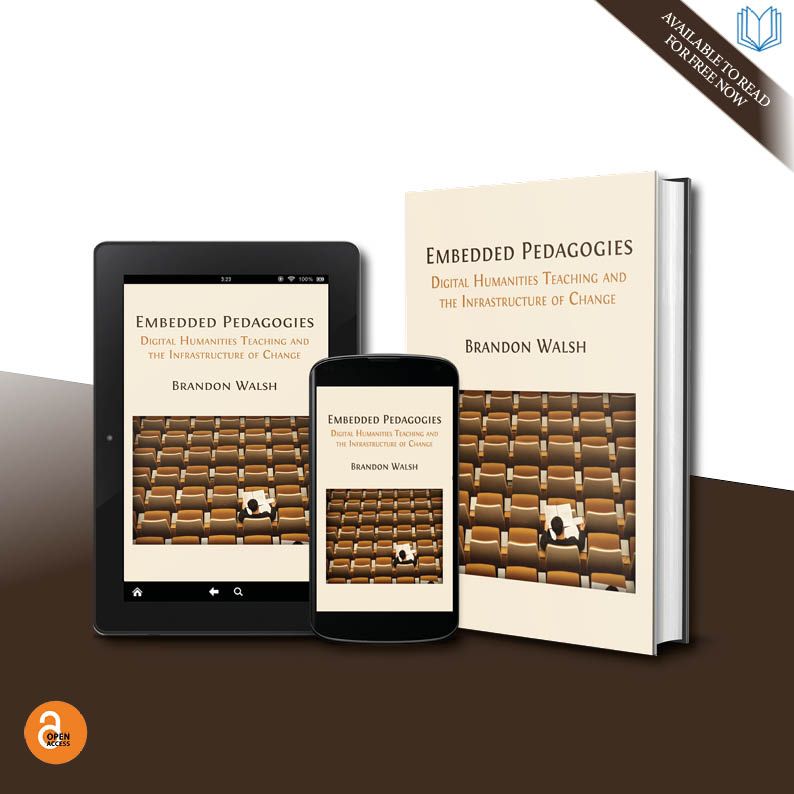
Embedded Pedagogies: Digital Humanities Teaching and the Infrastructure of Change offers a roadmap for university workers caught between the powers that shape the work that they do and the teaching that they hope to see in the world.


By Brandon Walsh
It is an enormously challenging time to teach. It can be easy to feel helpless, as a broad web of forces influences what teachers and learners can and cannot do together.
Embedded Pedagogies: Digital Humanities Teaching and the Infrastructure of Change offers a roadmap for university workers caught between the powers that shape the work that they do and the teaching that they hope to see in the world. The book argues that administrative norms, policies, and procedures push our teaching in directions instructors might not desire, acting as embedded pedagogies that structure the possibilities available for teaching and learning. Speaking from the standpoint of a digital humanities practitioner working in a university library, Embedded Pedagogies examines the intersections between teaching and administration with a view to shedding light on how they influence each other. We might use budgets as teaching objects to facilitate conversation about the political economy of the university and how we can more fully center students in our work. We might design classroom assignments that aim to help students define and empower their communities. Or we might engage students directly in the project of designing the future of the university. We all teach, and we all have something to give.
Each chapter of the book focuses on the stories that universities tell about themselves, how these narratives impact our work as teachers and administrators, and how readers can teach their way to better circumstances. Universities claim to be knowable, but this understanding is limited by design and obscures their inner workings from their teachers and learners. They offer statements of aspirational neutrality when confronted with political challenges, leaving the door open for hostile actors to undermine the very foundations of education. They frame themselves as rigorous and intellectual at the cost of the bodies and workers in their midst. And they position themselves as preparing students for the world of tomorrow while they structure those possibilities around conservative, pre-determined visions only available to a few. In contrast, Embedded Pedagogies argues for teaching that is transparent rather than opaque, committed rather than neutral, embodied and collective rather than individuated and intellectual, and that generates possibilities rather than pre-determined futures. Far from helpless, Embedded Pedagogies encourages educators to see themselves as the infrastructure of change that they want to see as they teach their way toward a brighter tomorrow.
Embedded Pedagogies is freely available through the Open Book Publishers website, where you can also purchase a variety of print and digital versions.